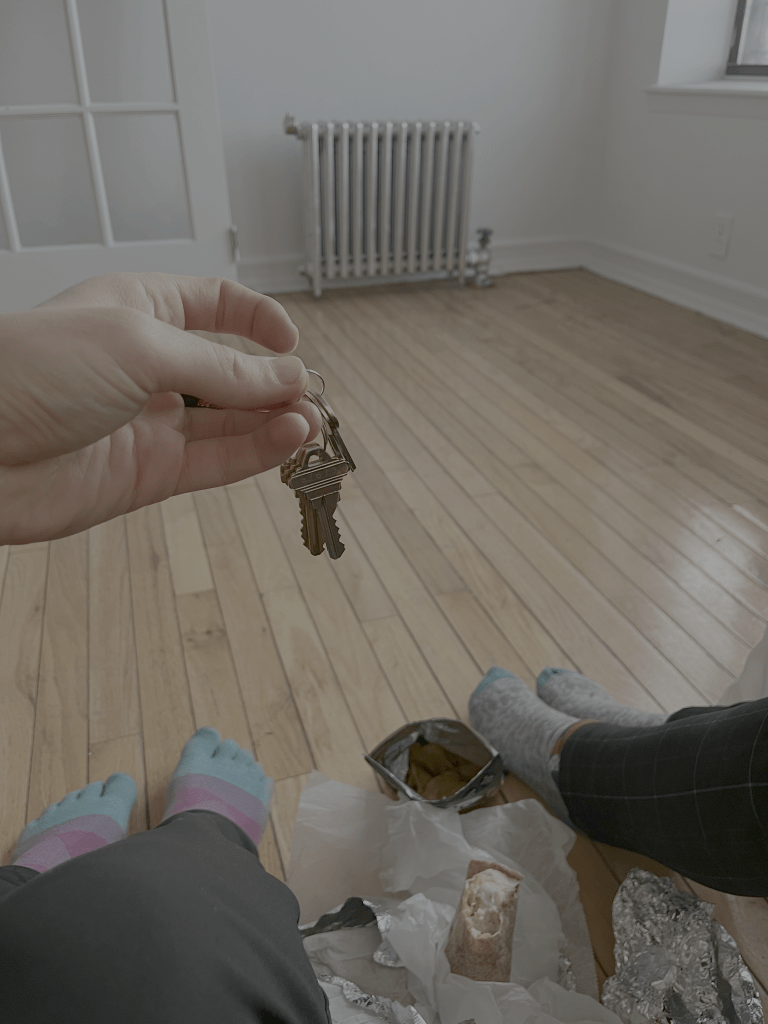
In which Our Hero demonstrates the void is optional.
Today I managed to manufacture—or maybe discover—some pleasure.
After a generally empty day (and I hate empty days), I was riding in the car feeling mildly dissatisfied when it hit me: I could change this. And the moment I realized that, I actually did. Suddenly I wasn’t dissatisfied anymore. I wasn’t stuck in that void of nothingness. I felt…pleasure. And that was nice.
Clown school is teaching some real skills! 😀
I was driving with a friend who kept trying to play with me. I rejected the first three or so times. Playing with other people is still hard, especially when I’m dissatisfied. It’s so much easier to play alone.
Which is unfortunate, considering I can’t play games alone until at least January 7th.
(I made a self-binding bet before I broke my foot. And now…well, here we are.)
So therefore:
Time for me to find new occupations for my ample free time whilst my foot heals.
(Or should I say “heels”?)
It’s nice that bored dissatisfaction isn’t mandatory, even if you’re bored.
It’s nice the game is still in me.
Perhaps some day I will learn to share it with others.
In which Our Hero muses on the interaction of these forces.
The question came up at dinner: What’s the relationship between play and depression? Is play the antidote? Is the lack of play the cause? Or are they simply two dancers who keep stepping on each other’s toes?
My take:
I love Play. Play is enlivening and delightful and deeply satisfying.
Play is a sign of a healthy environment: one that nurtures the growth and expression of its members.
Some environments don’t require play or can’t support it, especially high-stress or high-stakes ones in intense moments.
If you lack play long enough, you will feel like crap.
If you can’t play with people, you won’t feel good around those people.
Blockers to play:
Lack of safety. If you can’t experiment or express, you shrink. The body contracts. The options narrow. The world gets small.
I often think of depression as a kind of flatness. A greying-out of inner movement. And a lot of what prevents play, at least in my own experience, is fear/anxiety. So the loop becomes: fear/anxiety → no play → depression. It’s not the only description of the loop, but it’s a fair one.
Another view:
Maybe depression is fundamentally the lack of experienced pleasure.
If that’s true, then you can find pleasure through play. But also through other avenues, including observation and appreciation.
In that framing, play is one antidote, but not the only one. (And it may not be the proper antidote for a specific situation, nor a permanent fix.)
Still, I think social play is necessary for social satisfaction. It’s a treadmill you have to keep running on—just enough—for the system to stay stable. Stop for too long, and you get flung off the end, cascading into a wall of lonesomeness. Start running again, and the world comes back into color.
However, you can’t force play. You can only create the context for it to naturally emerge. Even if you’re a player? Even if you’re the game.
Friend: “We’re looking for ladyfingers” Grocery store employee: “What are those?” Me: “They’re like chicken fingers but made out of women.” Employee: “I can’t stand men, but that’s a good one.”
A friend told me I’m funnier now than before clown school—that I tell jokes for other people more than I used to.
That’s nice.
I do feel myself joining other people’s worlds more readily. It feels more comfortable, somehow safer. Like I’m less afraid of being hurt by them. Like I’ve internalized the fact that the pain of rejection is both temporary and unreal.
And I am still unquestionably afraid. But the fear is now useful. It’s a companion. A friend. I just need to embrace it, befriend it, and place it properly so it doesn’t own me.
At dinner, my dad asked me to do an impression I’ve done before: one of the teachers from my Le Jeu course this summer. I did it, and it was fun. The fact that sharing pleasure is more important than the impression’s accuracy put me at ease. Historically, I’ve refused in spots like this. Maybe because doing someone else’s game felt uncomfortable. But why? Who cares? Might as well give pleasure. Spread joy.
I was more open and comfortable and relaxed in general.
And noticing the spots when I wasn’t. And releasing them.
All three teachers agree: I should not attend the second half of this course.
That’s nice.
I wasn’t enjoying Neutral Mask. I wasn’t looking forward to Greek Tragedy. Friends have commented worries about my emotional health and about whether the school’s pedagogy implements brainwashing tactics. Perhaps it will be nice to have time off.
One of the main teachers says I analyze too much. Instead of analyzing, they say, I should “sit in the feedback.”
I’m not so sure.
When I sit in feedback, I misread it. When they told me my costume looked like “vomited broccoli,” I thought they were literally insulting the outfit. A friend later suggested it was meant to get under my skin — a non-literal pedagogical tactic.
But how am I supposed to incorporate something non-literal without analyzing it?
If literal doesn’t mean literal, then…?
And anyway, who wants to sit in vomit?
—
The head teacher asked me a question today. I wasn’t performing on account of my fractured foot, so another student took my slot. She looked at me and asked:
“Was your replacement excellent, or could you have done better?”
I said, “I don’t want to answer.”
The class booed.
I felt confused.
I asked her to repeat the question. She did. I said, “I don’t think it was excellent, but I don’t think I could have done better.” Then I named two specific weak points in the scene.
She said, “It’s good to know your level.”
And I agree. I wasn’t being self-pitying or self-judging — just honest about where I’m currently at.
I’ve had trouble with complexity here. A few days ago, we had three mistakes to resolve, and when I chose one hug, one kiss, and one Swedish handshake, I sensed tension as though people thought I was trying to be unnecessarily cute. And that’s literally 1+1+1=3. Complexity seems to be frowned upon. So what do I do when I’m tasked with following the fun, and sometimes find complexity fun?
At coffee today, a classmate realized Los Angeles is on the west coast rather than the east, and mentioned she formerly thought Africa was the world’s biggest country. She’s also had much more success than I have in recent class sessions.
Maybe I’m expecting something different from these clowns than they have to give. I’ve watched people forget a promise five minutes after making it. I’ve watched them make complete 180s in real time. Perhaps an excellent clown is so right-brained they exist only in the present moment.
Regardless, they’re great clowns.
I’m gonna miss them. 🤡
—
I’m excited to have some time away.
In January, a friend arrives to the school. That’ll be nice. We’ll take a course together. Probably live together. It’s good to bring a friend. 😀
I asked the assistant about switching classes; she said it’d be good for them administratively. So I might as well try it for one course: Melodrama. After that comes Bouffon, then Vaudeville. A change of pace. And if it’s still rough, I’ll know it’s not the section.
As for the newsletter: I was supposed to be on winter break from clown school for six weeks (Dec 13–Jan 25). Now it’s nine weeks. I’ll continue writing daily for two reasons:
In which Our Hero gently invites his classmates to find pleasure in their fear.
[I wrote this earlier today, before a long and insightful conversation with my roommate. By the vacillations of clown school, I’m not sure how much I still endorse or will endorse tomorrow. How’s that for a cop-out? 🤡]
Another shit day at clown school. I should frighten other students more.
Listen:
Earlier today we were playing dodgeball. Someone on the opposing team had the ball and motioned toward me. I ran away, bumped into a teammate, and she let out a startled little yelp, plus an admonishment along the lines of “come on guys, it’s a game.”
Later in that same match, I leapt to grab a ball, robbing the opposing team of a catch, like stealing a home run but dodgeball-style. A player said, “Chill out.” The first person would probably call themselves unathletic. The second, not very competitive.
Okay.
Sure.
What of it?
Sidebar: clown school is populated far more by theatre nerds than athletes. I’m probably the best all-around athlete in my class—not the strongest or tallest, just the one with the most hunger to win and the actual ability to put that into reality. So why is it not showing up?
After her yelp, I shrank back. I became smaller, gentler, duller. I had less fun.
But realistically? A little bump between teammates in dodgeball is not a big deal. No one fell. No one got hurt. It was a collision between two moving bodies in a game whose entire premise is hurling projectiles at each other.
The recent American neurosis of “don’t cause anyone fear ever” does not help me here. Hurting people would be bad. Frightening them? Not inherently. If two people bump into each other while playing dodgeball, the appropriate move is some sort of affectionate “eh, no worries love”.
But I’ve been avoiding frightening people. And it’s getting in the way of my clowning.
The first time I truly succeeded on stage was when I FINALLY LET LOOSE. A demon burst out of my sternum and shat poop-colored rainbows across the stage.
The teacher told me to tone it down, apologize, and bring the same energy with more sensitivity.
The second time I started from a light, airy emotional place: gentle by nature, and the power followed.
Today the feedback is that I lack impulse. And the truth is: I felt it. In the afternoon class, I wasn’t powering with impulse at all. I was stuck in my head, nitpicking the pedagogy (correctly, but uselessly). I couldn’t find pleasure in anything.
I hate being in this oscillation space.
My roommate disagrees with my whole “frighten them more” instinct. He thinks I’m conflating playing intensely with playing to win (and that playing to win will necessarily not maximize group pleasure). He says I lack a lightness—a tiny joke kept in the back of my mind.
And maybe he’s right. On stage today, I lost the game. I forgot the game. I played it well for a few minutes. Then I forgot it.
Never forget the game.
Look.
When I do have impulse, people get scared. That’s the truth. I’m intense. When I try to win at dodgeball, people get quiet and the light, floaty vibe evaporates. Today I had the ball, and an opponent squared up. I pump-faked twice. Then I whammed him.
During that exchange, the room went silent. The airy part of the game vanished.
Did it become another kind of fun?
Is it not fun to watch two gladiators square off? To see combatants toy with another in a spirit of agreed-upon play? Isn’t that a form of respect—acknowledging we both have power and we’re choosing to use it?
Maybe the audience wasn’t laughing. Maybe they were leaning in. I don’t know. Maybe I’m justifying.
Maybe I should scale it: go hard against the skilled players, soften against the less-skilled. A consent-based approach to dodgeball. (Unless I’m the last one alive. Then it’s win, win, win.)
I don’t know whether it was pleasant to watch me whang that guy. I imagine it was.
I’m six feet tall, bearded, and frequently voracious. Of course people are scared of me. Underneath any coverings I add (silliness, friendliness, gentleness), they may always feel some amount of fear.
But maybe their fear isn’t a reason for me to shrink.
Maybe their fear is something they get to deal with.
Because otherwise, I become small and boring. I lose my impulse. And that is absolutely not fun for me.
Fear without safety is fear. Fear with safety is exhilaration.
I guess I need to give people that safety.
To clearly show this is a joke. This whole thing is silly. Show them in a way that’s obvious to them: I’m not taking myself too seriously: the thing I’m doing is a joke. And that way, when you fear me, you also feel safe around me. And that way, even though you fear me; even though you respect me and my intensity, you love me.
Would you rather I be too much or too little?
Right now, at school, too much. They can work with too much. Too little just gets kicked off.
In which Our Hero sleeps, sins, and seeks salvation.
At the end of this week, I’m a quarter of the way through this program. That’s wild. Three times as much left as what I’ve already done. No wonder it feels like I’ve lived six different emotional lifetimes.
I told my sister today about our daily Simon Says game. It’s brilliantly constructed. It’s also deranged.
Here’s how it works: when you make a mistake, you must seek absolution. You get to choose your method of redemption. The menu:
Hug
Kiss
Swedish handshake
Nothing
Or… torture
If you choose “nothing,” nothing happens. If you choose “torture,” one of the teachers (or a friend, if you prefer) faux-tortures you in front of the class. If you choose one of the other options, you turn to a peer and ask, “Can I have a [hug/kiss/handshake]?”
If they say “yes,” you receive absolution.
If they say anything else—literally anything: “yep” is interpreted as “go to hell”—you get tortured.
My sister was horrified. Honestly, same. The first time we played, I felt like I’d accidentally joined a cult that prioritizes whimsy over human rights. And yet…it works. The faux-torture weirdly brings us together. There’s something intimate about placing your fate in someone else’s hands and trusting they’ll either help you or throw you to the wolves. (And, sometimes we just choose the torture directly: our Assistant Teacher is an exquisite tickler.)
My sister asked why people don’t always say “yes.” Partially because we’re learning how to ask and receive asks well. So if you ask poorly (not loud enough; emotionally closed; selfish), your odds plummet. And partially because, well, that’s the game.
—
Last night, for the first time in ages, I slept well. Deeply. My room traps CO₂, so I’ve been sleeping poorly. Last night I cracked open both the window and the shutters. Oxygen: acquired. Primitive problem, elegant solution.
I don’t have much to write about today. My energy feels softer, steadier.
One woman in class has been struggling to find a lower, more powerful voice. Our assistant teacher stood behind her and performed a kind of gentle, low Heimlich maneuver while she screamed “FUCK YOU, [Head Teacher]!” at full volume. It helped. Theatre is strange medicine.
We also explored two new “substances”: oil/petrol/gasoline and superglue. I’m tired of this exercise. Some classmates love it; I don’t. Maybe that’s the point: finding joy in an approach I don’t naturally love. I can learn it. I just don’t yet.
—
I found a partner for Friday’s scene. The task: play contrasting characters who always agree. Hot, fast, smoky oil in perfect harmony with gentle, falling snow: two beings that shouldn’t coexist and yet do.
It might be funny. It might be a disaster. That’s clown school.
—
My goal this week is simple and impossible: be sensitive, be open, be gentle: with my partners, with the audience, with myself. I’ll do the exercises, but the real work is internal.
Do I have pleasure? If so, am I sharing it with the audience? If so, am I sharing it with my partner? Am I playing together, or am I playing alone?
Clown school is hard. But at least I slept. And maybe—just maybe—I’ve solved my CO₂ problem.
For weeks I’ve been trying to reverse-engineer what we’re actually doing in clown school.
There are moments in class when something works—a laugh, a tiny eruption of joy—and the teacher says, “Yes, that.” And then there are moments when the entire room goes still and we all collectively realize the joy has petered out.
Our teachers keep highlighting the importance of the game. I kept wishing there were actual rules. Not to restrict play—but to name what’s already happening.
So I wrote them.
This document is the clearest articulation I’ve managed so far of how the “game” of clowning works in the Gaulier school of thought: the goal, the metrics, the tactics, the traps, the physics of pleasure, the difference between Major and Minor, how to avoid killing your own play, why dignity matters, why heaviness kills the audience, and the one rule that seems to underlie everything: maximize total pleasure without harming yourself.
If you’re in clown training, or theatre, or comedy, or anything requiring presence and sensitivity, you may find this helpful. Or validating. Or confusing in a way that becomes helpful later. That’s typically how this school works.
Here is the full writeup. Comments are enabled in case you’re curious or want to poke at any element:
How to avoid hurting yourself—physically, emotionally, professionally
If you’re not a clown and don’t plan to be one, it still might interest you. Clown logic rhymes with life logic more than we admit: be sensitive, be generous, be open, don’t force things, play the game that’s actually happening instead of the one in your head.
And share your pleasure. People open to you when you do.
In which Our Hero explains how to tiptoe text ‘top the tulips.
I spoke today with a close friend who reads my blog religiously. He told me he was this close to calling and saying:
“Dude, maybe you should take clown school less seriously.”
But then, he said, he was relieved to see I’d arrived there myself this week.
I taught him something I learned: put the text on top of the game. (Don’t let the text strangle the game.)
He’s a musician, so here’s the analogy I used:
When you play a song on piano, you can think: C major, F, G, C-flat. Technical, correct, literal.
Or—you can visualize a volcano erupting. Or summon some vivid, private memory.
The game is that image/memory/emotional source. The text is the notes—or the words.
If you play the game and let the text sit lightly on top of it, the audience receives two tracks at once. We receive both the notes and something of the image.
A common mistake is to use the game to “underline” the text.
If you’re imagining Jesus while playing a hymn about Jesus, the audience gets the same information twice. It’s flat.But if you’re imagining a volcano erupting while playing a hymn about Jesus, the audience receives two different tracks. It becomes richer, stranger, more alive. They can’t necessarily name the image, but they can feel its charge. It evokes something personal in them.