Giblets (Jan 17 2026)

In which Our Hero feels offal.

Just to the left of my navel, I learn a truth.
Not about facts or the world,
but about how a topic feels to me
I think this is what people mean when they say “follow your heart” or “speak from the heart”.
It troubled me for many years — still does — because that place is not my heart. It’s at least five inches below my heart, and two to the outside.

We also advise “trust your gut”. Is the place I found not my heart but my gut? Am I misusing each location for its maximally effective purpose? Follow your heart in love; trust your gut in business?

After casting about for a writing theme a few days ago, a friend suggested I write as the ideal version of me would.

Hemingway says write the most true sentence. Then the next true sentence.

The truth is, I feel scared. Not all of me, but a good 80%. I’m pushing and shoving toward the biggest financial decision of my life. I’ve capped my downside risk at an acceptable amount. I’ve run the numbers by family and friends more risk-averse than me. The answer is go.

Courage is not the absence of fear. It’s action while in the presence of fear. In this case, it’s encircling the fear with my flabby squeezers and hugging it while I jump the two of us jump into an abyss.
Most of the time, the bungee cord holds. Take a situation that would otherwise be frightening: if you add safety, it becomes thrilling.

The fear is not me. The fear is not anything. Both it and I are transient (that’s a pun).
I see why people turn to religion in times of stress.
God is what we call the experience of being healed. There’s something addictively reassuring – especially in our most fearful moments – in believing someone is looking out for you, sending positive outcomes your way.

Let us run then, you and I
As the sun surmounts the sky
The icy clovers frost with dew
Let us dive then: me and you.

I fear nothing, though fear is present.
Fear is my friend. I stand atop its shoulders.
Together, our future rolls out a carpet to greet us.

Roots, Post-Wings

In which Our Hero plants a seed so grass may grow.

For the last 7 years, I’ve known my next destination only upon leaving my current one. The farthest ahead of time that I bought a plane ticket was one month, and I ended up changing that flight. More often, I’m choosing the next place less than a week ahead of time. 

In many ways, it’s magical: 

  1. Carrying everything I need on my back gives me complete self-sufficiency. Like a human turtle.
  2. Traveling light became a necessity. A dear friend has a tattoo that says “Travel light.” A good policy.
  3. I’ve learned to make friends quickly. When lost, I talk to strangers. When found, I do the same.
  4. I’ve shared small moments that mattered: teaching a baby to use an airplane tray table; splitting mangosteen with a man in Laos.
  5. Surprising reconnections: three people I knew in high school, all in northern Thailand. A man I met in Indonesia who later booked a room in my flat at clown school.
  6. Humans are the same everywhere. Then again, culture is real. 

In others, it’s tough: 

  1. Feeling unrooted. I’ve sacrificed depth for breadth. (Depth within breadth is its own type of depth. But it only goes so far.) 
  2. Insufficient community. The people you see every day or week are the people you build strong bonds with. 
  3. Lack of habit. I used to be a habitual person. Moving into a van really changes things. Selling the van without a new place to live changes things even more.  It’s hard to eat your normal daily breakfast when the monastery you’re visiting fasts until noon. 

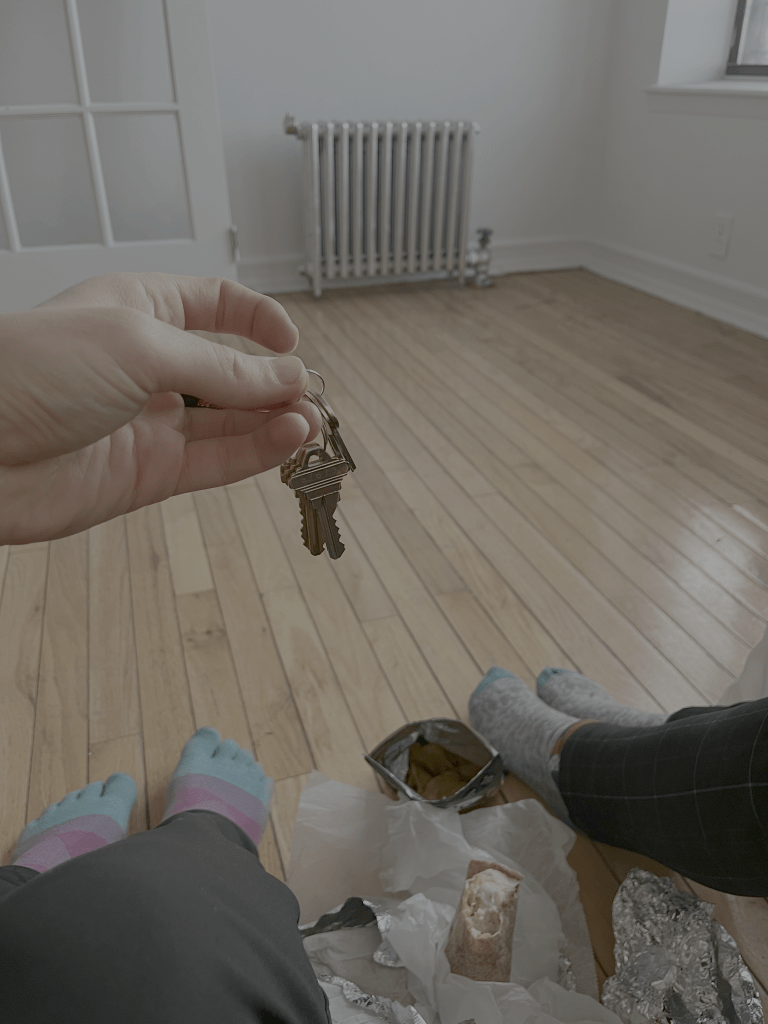
Today I received the final document for my apartment purchase. I’d like to live there for a long time. I’d enjoy tacking my kids’ heights on the doorjamb until they eventually leave to find their own Laotian mangosteen. 

The deal isn’t done yet, and then there’s still renovations, so I’m hesitant to get too excited. 

But the yearning for stability is strong in me.

Clown School Break Day 48: On Culture & Correctness

In which… “something, something, cultural relativism. But definitely only a weak version of it.” 

A while ago I wanted to play trivia at home with friends. I had stumbled upon a British trivia show that inspired this notion. We played together (i.e. watched the show while guessing along). The problem: we didn’t know the British popular culture.

I then went on a hunt for equivalent shows that we Americans might be able to enjoy. Ultimately, I arrived at… Jeopardy.

That’s right: I hunted around through around a dozen shows and ended up at the quintessential American trivia show.

Why?

Is the format familiar to me?

Is it coherent within my culture?

Does it have form that fits my expectations, simply because I was raised on it?

For a while now, I have been of the opinion that most human preferences are not real but learned. Your influential parent enjoys eating spicy food → you learn to enjoy spicy food. A leader of your country speaks with a lisp → people are still speaking with a lisp centuries later.

It really removes many beliefs about the meaning of “good”, doesn’t it?

Still, some things are clearly worse than others. 

I’m reminded of a friend who concluded (after much analysis) that “good” simply means safe and “bad” means dangerous. (Both in roundabout ways.) 

How do you branch out? How do you discover other good things? And when is it okay to go back to what you grew up with?

Tonight, my partner and I made enchilada casserole. She grew up eating it with green sauce and was hesitant to make it red. We ended up making two: one red, one green. It was a fun game to compare: the safety of the known alongside the adventure of the new. The verdict? Red won.

It’s fun to play games where even if you lose you win. 

I’ll take play for 300, please, Alex!

Clown School Break Day 46: Trivia ain’t Trivial 

In which Our Hero leads a team to victory! 

My team won at trivia. Thirty percent of trivia is assembling the right team. Thirty percent of trivia is knowing the right answers. Thirty percent of trivia is accurately knowing your knowledge. And the last thirty percent is knowing how to give 120%. 

In the team-assembling category, my team excels at movies, science, games, literature, and mythology. We are weak at sports. This week, there was only one sports question rather than an entire sports section. That’s lucky.  

In knowing the right answers, we performed strong. We missed only 6 of the 22 questions. While that might sound like a lot (it’s almost a third!), our big advantage is in the next point… 

We know what we know. When one of my teammates says “I know this one”, we bet hard. Today’s trivia involves a point-wagering system: for each round of three questions, you assign one a small number of points, one a medium number, and one a large number. You submit your point wager when you submit the question, before you know what all the questions in the round are. So a team that gets only one third of the answers right can equal a team that gets two thirds of the answers right, so long as the first team assigns points correctly and the second does not. 

And then there’s knowing how to give 120%. When we know the answer is “Mississippi mud [something]” and my team is waffling between Mississippi mudslide and Mississippi mud pie, Your Humble Narrator (in his acting role as Team Captain) submits the answer as “Mississippi mud (pie)”. Ergo, when the answer is revealed to be Mississippi mud *cake*, Our Hero’s team receives the point. (Deservedly? That’s not mine to judge; I’m just here to get points.) This gamesmanship also manifested in Your Hero’s tracking of the points (so as to note that we were shorted 2 points in the theme round, and then get those reinstated). 

And I guess one final part: uniting people to a purpose. Trivia is not important. We’re fighting for a $30 giftcard when our table is spending twice that. This doesn’t matter. 

But it’s fun to try. 

Clown School Break Day 41: Grocery Store Juggling

In which our Hero keeps balls in the air. 

Grocery stores are for whimsy.

Listen:

At the grocery store to purchase oranges for non-alcoholic New Year’s mimosas, I tossed oranges toward my partner so she could catch them in the plastic bag. A simple game; a fun game; a game that hurts no one.

My partner caught the first one.

A store employee approached us.

My partner caught the second one.

The employee stood beside us, continuing to watch.

My partner missed the third one. (I shorted the toss.) She retrieved the orange and placed it in the bag.

“Could I ask you to do something?” the clerk said.

“Sure,” I replied, expecting him to tell us to stop. I had expected him to tell us to stop since the moment I saw him walking over.

“I had cataract surgery recently. Could you toss me one of those oranges? I want to see if I can catch it.”

“Sure,” I said. “Tell me when.”

“Now’s good.”

I tossed the orange. He caught it. His face released sunlight it had been holding back for years.

“I used to juggle three balls,” he said. “Not well, but I could keep ‘em in the air. Then cataracts got to me. It’s good to be back.”

“I’m glad to hear it.”

“I didn’t want to ask a friend to toss me something. That would be too intimate. So I figured I’d ask a stranger.”

“Glad I could help.”

My partner and I returned to our toss-and-catch with the oranges. We purchased six pounds of oranges and drove home.

Too often, we stop playing out of fear that someone will tell us to stop, when all they wanted was to play along.

Clown School Break Day 37: Social Place

In which Our Hero remains visible without belonging. 

Let’s talk about social place. 

In 2018, I bought a van. My most formative non-familial relationship was ending, and I was on a personal journey. 

I spent seven years seeking my place. Living in a van, driving around. My place had been shattered, my foundation upended. I sought the right group of people, the right social place. 

I found the regional Burning Man community. Not the community at the big Burning Man festival itself, but the smaller independent organizations that circle the same principles. I found, perhaps for the first time, a community that accepted me and to which I wanted to contribute. I made art that touched people’s lives. Some of them still speak about it, 5+ years later. 

I moved to New York City in search of a partner. Nearing 30, with my friends all partnering and beginning to spawn, my situation became one of “Is this a part of life you want to have? Because you can seek it later… but it’s much easier if you try now.” One woman broke my heart. I flew to Australia to write a play. Returning to New York a year later, I met my now-partner.  Our first date was 11 days long. For our second date, we drove across the country together. She sublet her apartment, and joined me in nomadicness for the last 2 years. 

I wonder sometimes about social place. I occupy an unusual position. Enough of a dilettante in most areas to be able to hold my own. Friendly and affable, generally found to be helpful, but without roots. 

For most of my childhood, I had a single dedicated friend. Schoolwork was trivial; most of my fellow students I found uninteresting. I’ve left each major experience with some dedicated friends. And a host of pleasant acquaintances, too. 

I’ve never really been a group guy. I have the sort of preference: “Instead of camping with your Burning Man group, how about I camp next to you and we hang out every day?”

If part of life is finding who you are and doing it on purpose, 

at some point it’s worth accepting that I’ve never found a group to be home. 

And probably never will. 

Perhaps my belonging is episodic, relational, and lateral (not collective). 

Still, sometimes it feels lonely. 

Clown School Break Day 36: Empty Spaces

In which emptiness permeates Our Hero. 

Today I drove in silence. My partner in the passenger seat, surrounded by calm empty space. 

Usually I drive with music or a podcast. This drive was 3.5 hours. 

For the first two hours, just being. 

Once in a while adding a comment. Saying something. Mostly quiet. 

It was nice. 

— 

It reminded me of some time spent on stage. The increased comfort that comes from increased experience. The greater ease that comes from an acceptance of emptiness. 

I’m reminded of the idea variously attributed to Miles Davis and other musical greats: playing the spaces between the notes. 

It’s pleasant to play the spaces between the notes. 

It’s even more enjoyable to let the spaces between the notes play. 

And then

To level up

To the notes themselves playing 

And you simply helping

😌 

Clown School Break Day 33: On Planning & Presence 

In which Our Hero delivers presents (presence?)

Today I delivered gifts to poor families. The town I’m in does a “Christmas effort”: you drive your car to a designated hub; they load in gifts and food; you deliver them to the address.

And once in a while, you see a child jump for joy.

Today, for a few seconds, I experienced that pleasure.

We delivered five boxes in total. Five families whose Christmas gifts and food, from shopping todelivery are provided by donors and volunteers. And by virtue of being at the end of the steps, I get the joy of seeing a 9 or 10 year old jumping up and down with glee.

If I didn’t see this, I wouldn’t have enjoyed it as much. A friend’s friend’s mother volunteers for this organization as a shopper. That project is a puzzle. It’s trying to answer questions like “what would X person want for Christmas” where the only information you’re given is “12 year old”, “boy”, and “speaks only Spanish” and then you’re limited to the piles of gifts that have been donated. The puzzle might be engaging, but it’s not as visceral. You get pleasure from knowing you’re helping.

I got pleasure from seeing the boy happy.

Comparatively, I did little work. The organization’s coordinators. the financial donors, the shoppers, the wrappers: all did more to actually help than I did. I’m just the last mile. Yet I get that actual, real-time pleasure.

It’s a funny trait consistent in many areas: those who are on the ground, at the end, being the boots: you see the people, you get the experience. But the people before have much more impact. (As a simple comparison: what if we were to pay people to do each bit? Shopping for the gifts $50; the gifts themselves cost $100; organizing a team even more. But replacing me with an Uber would be only ~$10.)

The upstream people must be driven by some internal elements instead. By a rich imagination? A strong internal model? A complete lack of presence.

A clown exists in the moment. By (at least my school’s) definition, they interact with the audience in real time. How much is planned? Sometimes a lot. But the interaction itself is live and present.

I wonder if people enjoy different elements. Not everyone wants to perform. Some wish to be agents or producers. Some care enough about the organization or the mission to rise in the ranks.

I think that’s it. Those who care enough – for whatever reason – are willing to undergo the effort to achieve the outcome. And the effort includes leadership, struggle, and trials.

Find what you care about. Dive into it. Give to others.

Over eight years living nomadically, internationally, on the road, I’ve sought my people. I’ve historically found them few and far between. But those who I do like, I adore. Is it a genetic difference? A difference in interests? An unusual focus? Are they just the right kind of autistic? For whatever reason, they’re eccentric and have impactful ideas. We dive deep into our areas and share our experiences. We see ourselves and the world as porous interactions. I contribute to their lives and they to mine.

And if we do it right,

we jump for joy.

Clown School Break Day 30: Cooperative Games

In which Our Hero collaborates. 

My family has recently taken to playing cooperative games. Growing up, we played mainly competitive games. Sometimes team games, but more often individual competitive games.

My partner recently posed the question: What if a person grew up playing mainly cooperative games?

An interesting question.

For one, most sports are competitive. (Sure, some are team-based, but those are still generally against other people rather than a challenge against nature or circumstance.)

For two, most contrived games (as distinct from natural games like science or business) are competitive.

For three, most good contrived games are competitive. Taking board games as a field I know quite well: only over the last ~20 years have cooperative board games taken off, and still they are much less popular and less created than competitive ones.

Bad games are generally not worth playing. They’re unfun and teach poor / useless skills.

Good games are, well, good.

I learned to count and perform basic mental math through the card game cribbage. I’m not aware of a cooperative equivalent that’s as engaging and strategic (and building one’s strategic muscle is worthwhile in itself).

Cooperative games teach communication, team coordination, collective strategy, leading and following, ebbs and flows.

I used to ghostwrite for the founder of the video streaming platform Twitch. He and his brother both sold companies for ~$1B, and they credit their parents’ chore system with teaching them to collaborate and strategize. The chores had to be completed, but the how and the who were up to the children’s choices. (For more, search the word “chore” in this article or this article.)

Collaborative games are excellent. And in the grand scheme of things, many competitive games are really about collaboration on the meta level anyway. Tennis is about (i.e. funded by) encouraging people to play tennis, which is generally good for physical health. Individual competitive sports like running are about setting a new record, thereby pushing human physical ability to new heights.

Perhaps it’s true: Even when we’re competing, we’re collaborating.

Clown School Break Day 29: On Moving Holidays

In which Our Hero experiments with time.

My family moves holidays.

By moving them, we get more time together. And the ability to do more Christmases with others. (This year, I’m doing one Christmas with my family and then three with my partner’s.)

The official Christmas – or “consensus Christmas,” as I call it – is arbitrarily chosen anyway. Orthodox Christmas is in January; Jesus’ actual birthday is unknown; and Dec 25 was chosen in the 4th century. So we slide things around.

Today was family Christmas Day 1. I received two clownish gifts. 

One was from my gluten-free brother-in-law: a large, baguette-shaped pillow.

[In a French accent: “honh honh honh”]

The second was a sign saying “Beware of Clowns.” It’s visually akin to a normal “Beware of Dog” sign.

Teeheehee.

Musing on this relationship with time, I wonder how much it’s shared by clowns. They’re an immediate lot, making plans for now and changing them when the wind blows. The school allows for drop-ins and drop-outs as desired. You can come for a year. Or for one course. Or leave and return next year. Or the year after. And you definitely can’t take the second year clown course until after you’ve taken the foundational Le Jeu course. Or at the same time: that’s fine too. 

This is a game with time and convention. 

Most people have never considered moving a holiday. “Christmas is on December 25th”, they might say. And they’re right. But they’re only right because people decided they’re right. And social constructs are fertile ground for games. 

It’s also an act of engineering. We found a problem: many demands on the same time. So instead of moving our bodies (see the movie “Four Christmases,” where a couple tries to do all four divorced-family Christmases in one day), we move the holiday. 

Clowning and systems engineering are shockingly similar. One is attempting to achieve a system result; the other an emotional one. But the method is the same: find what’s out of balance and adjust it until the whole thing works.

It’s nice to play with social temporal agreements. But it’s nice because the people I care about agree with it, and all play in similar ways. 

There are also times when I think something’s a game and someone else thinks it’s absolutely not a game. Those times are no fun at all. 🤡