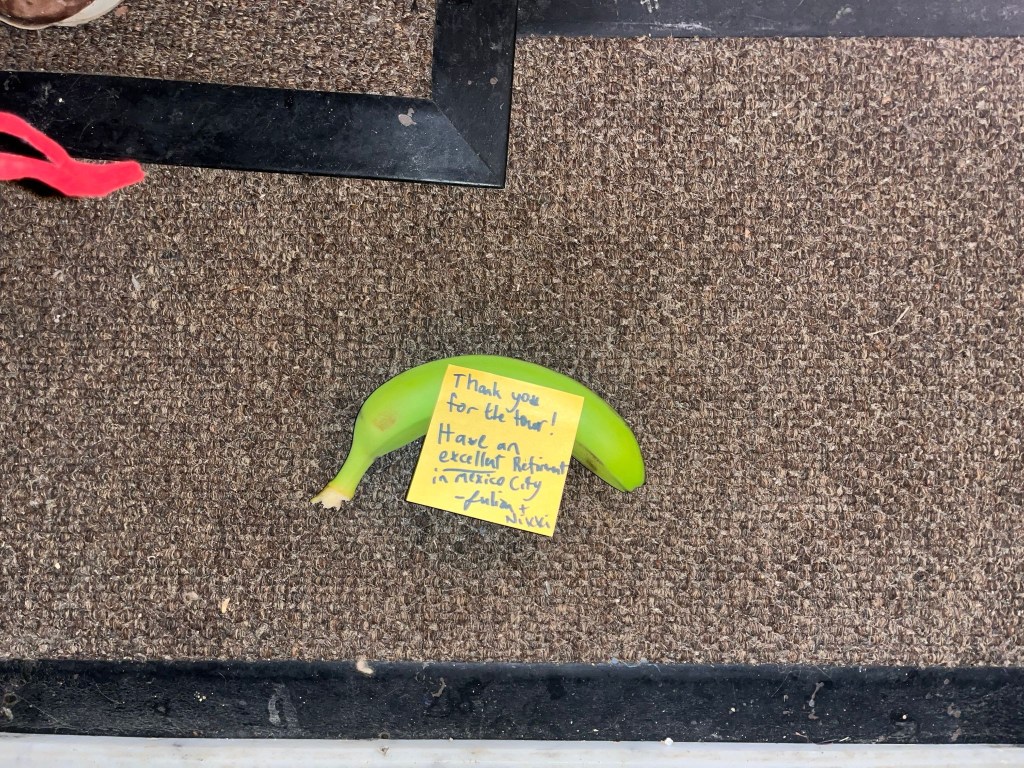
Clown School Break Day 39: Likeability

In which Our Hero, like, likes likability?

I was speaking earlier today with a friend who is a very polarizing figure. I am also a polarizing figure, but much less than him. He is often right, but also often disliked. The sort of person who is correct about the mismanaging of funds in an organization, but when he raises this to general public awareness, ends up somehow getting kicked out of the organization. 

This friend also has described me as “a bit of a people-pleaser”. (Which is amusing because most people would not describe me that way.) 

Clowning is about being liked. Clowns are lowest common denominator performers. They find pleasure and share pleasure in a mass-market, pre-language, pre-thought way. 

Clowns are excellent at a specific veneer. Not a substance, but a manner. Pleasure, joy: these are good things. But they’re not everything. Clowns (and actors in general) are emotional salespeople. Models are to fashion as clowns are to pleasure as actors are to emotions. 

I respect clowns and actors (and I also respect salespeople). But being a clown or an actor is completely unrelated (and sometimes antithetical) to many other virtues. For example, clowns are anti-intellectual. Clever jokes – at least at this school – are undesired. 

Perhaps pleasure is just the first step. Acting/performing might begin with finding your pleasure and sharing your pleasure with the audience, but it’s not the end. The end includes having a message or somesuch. 

I think this particular school is teaching a valuable skill. I also think that the implementation of it in its purest form – through clowning or through acting – doesn’t appeal to me. I’d rather have valuable things to share, not just share them well.

Clown School Break Day 37: Social Place

In which Our Hero remains visible without belonging. 

Let’s talk about social place. 

In 2018, I bought a van. My most formative non-familial relationship was ending, and I was on a personal journey. 

I spent seven years seeking my place. Living in a van, driving around. My place had been shattered, my foundation upended. I sought the right group of people, the right social place. 

I found the regional Burning Man community. Not the community at the big Burning Man festival itself, but the smaller independent organizations that circle the same principles. I found, perhaps for the first time, a community that accepted me and to which I wanted to contribute. I made art that touched people’s lives. Some of them still speak about it, 5+ years later. 

I moved to New York City in search of a partner. Nearing 30, with my friends all partnering and beginning to spawn, my situation became one of “Is this a part of life you want to have? Because you can seek it later… but it’s much easier if you try now.” One woman broke my heart. I flew to Australia to write a play. Returning to New York a year later, I met my now-partner.  Our first date was 11 days long. For our second date, we drove across the country together. She sublet her apartment, and joined me in nomadicness for the last 2 years. 

I wonder sometimes about social place. I occupy an unusual position. Enough of a dilettante in most areas to be able to hold my own. Friendly and affable, generally found to be helpful, but without roots. 

For most of my childhood, I had a single dedicated friend. Schoolwork was trivial; most of my fellow students I found uninteresting. I’ve left each major experience with some dedicated friends. And a host of pleasant acquaintances, too. 

I’ve never really been a group guy. I have the sort of preference: “Instead of camping with your Burning Man group, how about I camp next to you and we hang out every day?”

If part of life is finding who you are and doing it on purpose, 

at some point it’s worth accepting that I’ve never found a group to be home. 

And probably never will. 

Perhaps my belonging is episodic, relational, and lateral (not collective). 

Still, sometimes it feels lonely. 

Clown School Break Day 36: Empty Spaces

In which emptiness permeates Our Hero. 

Today I drove in silence. My partner in the passenger seat, surrounded by calm empty space. 

Usually I drive with music or a podcast. This drive was 3.5 hours. 

For the first two hours, just being. 

Once in a while adding a comment. Saying something. Mostly quiet. 

It was nice. 

— 

It reminded me of some time spent on stage. The increased comfort that comes from increased experience. The greater ease that comes from an acceptance of emptiness. 

I’m reminded of the idea variously attributed to Miles Davis and other musical greats: playing the spaces between the notes. 

It’s pleasant to play the spaces between the notes. 

It’s even more enjoyable to let the spaces between the notes play. 

And then

To level up

To the notes themselves playing 

And you simply helping

😌 

Clown School Break Day 35: The New Player 

In which a new teammate joins Our Hero. 

What is it like to add a new player to an established team? 

Today we added a new player to our 3-person cooperative poker game. 

Upon adding this fourth person, we reverted back to the basic version of the game as it was a fitting level for them. 

Here’s what the experience was like for me: 

  1. Less psychologically engaging. The game was simpler so the intensity was lower. 
  2. More meta-play. I asked more questions, engaged in more conversation, made more jokes. We all did. The game itself was less of the game. We added other games to fill the empty space. 
  3. It was fun for a different reason. The relationship is one I care about. So I prioritized connection and play with this new player. The other players did too. We all wanted them to have a good time. So we left having enjoyed ourselves, but not as much due to the game itself as we had previously. Instead, it was more due to compersion

Our new player stepped away. We returned to our triumvirate crew. We took one round to re-acclimate and then clicked back into it. 

Perhaps much of socialization is knowing what game you’re playing at any given time and effectively switching between them. If you have more capacity, add another game. If you’re overwhelmed, let go more. If you’re welcoming a wobbly player you care about, play with them more (outside of the main game itself). And always know which game is most important. 

Clown School Break Day 34: Invention via Iteration 

In which Our Hero builds upon himself. 

I created a new game today. 

We started with the game I described two days ago. 

We played with three people. It wasn’t as good as with 4 or 5 people. Then we expanded so we each received two hands instead of one hand, for a total of 6 two-card hands. 

Then we gave ourselves 3 cards per hand instead of two. 

Then we gave ourselves 6 cards instead of two sets of three, which we subdivided into our own three-card hands. 

What did I learn? 

  1. Follow the fun. When it’s not fun, find new fun. 
  2. Don’t push. If it’s fun enough, stick with it. 
  3. I like chaos. Compared to my card game compatriots, I enjoyed the more intricate game. (Part of that may be my familiarity with poker — i.e. this end version was farther at the end of my comfort zone while the basic game had become trivial). 

We spent 5 hours today playing that game. Playing variations. Ending at the more intricate one. 

Also this: 

  • To get to the end we had to go though the steps. Sometimes you have to take people through the basics, not start at the end if the end is too complicated. 

Building blocks. Leveling up. 

And one more thought: 

  • In the last hand, I correctly called all three cards in two of my compatriots’ hands. One of my friends half-jokingly called me “the oracle”. 

Perhaps what other people find chaotic is just the space I exist in. Sometimes what’s trivial to you is complex to me. (My partner laughs when I refer to putting frozen food on a plate and microwaving it as “cooking”.) 

This reminds me of one of the lessons from clown school: everyone has their own challenges. What’s trivial for me may be hard for you. Jesus would say “judge not lest ye be judged”. (And after all, today is the day for celebrating his birthday.) 

I’m glad to have seen my classmates trudge through their own challenges. And I’m glad to have built up the self-comfort prior not to judge them during the process. That would be a real dick move. 

🤡 

Clown School Break Day 33: On Planning & Presence 

In which Our Hero delivers presents (presence?)

Today I delivered gifts to poor families. The town I’m in does a “Christmas effort”: you drive your car to a designated hub; they load in gifts and food; you deliver them to the address.

And once in a while, you see a child jump for joy.

Today, for a few seconds, I experienced that pleasure.

We delivered five boxes in total. Five families whose Christmas gifts and food, from shopping todelivery are provided by donors and volunteers. And by virtue of being at the end of the steps, I get the joy of seeing a 9 or 10 year old jumping up and down with glee.

If I didn’t see this, I wouldn’t have enjoyed it as much. A friend’s friend’s mother volunteers for this organization as a shopper. That project is a puzzle. It’s trying to answer questions like “what would X person want for Christmas” where the only information you’re given is “12 year old”, “boy”, and “speaks only Spanish” and then you’re limited to the piles of gifts that have been donated. The puzzle might be engaging, but it’s not as visceral. You get pleasure from knowing you’re helping.

I got pleasure from seeing the boy happy.

Comparatively, I did little work. The organization’s coordinators. the financial donors, the shoppers, the wrappers: all did more to actually help than I did. I’m just the last mile. Yet I get that actual, real-time pleasure.

It’s a funny trait consistent in many areas: those who are on the ground, at the end, being the boots: you see the people, you get the experience. But the people before have much more impact. (As a simple comparison: what if we were to pay people to do each bit? Shopping for the gifts $50; the gifts themselves cost $100; organizing a team even more. But replacing me with an Uber would be only ~$10.)

The upstream people must be driven by some internal elements instead. By a rich imagination? A strong internal model? A complete lack of presence.

A clown exists in the moment. By (at least my school’s) definition, they interact with the audience in real time. How much is planned? Sometimes a lot. But the interaction itself is live and present.

I wonder if people enjoy different elements. Not everyone wants to perform. Some wish to be agents or producers. Some care enough about the organization or the mission to rise in the ranks.

I think that’s it. Those who care enough – for whatever reason – are willing to undergo the effort to achieve the outcome. And the effort includes leadership, struggle, and trials.

Find what you care about. Dive into it. Give to others.

Over eight years living nomadically, internationally, on the road, I’ve sought my people. I’ve historically found them few and far between. But those who I do like, I adore. Is it a genetic difference? A difference in interests? An unusual focus? Are they just the right kind of autistic? For whatever reason, they’re eccentric and have impactful ideas. We dive deep into our areas and share our experiences. We see ourselves and the world as porous interactions. I contribute to their lives and they to mine.

And if we do it right,

we jump for joy.

Clown School Day 32: A Virtuous Pleasure Cycle

In which our hero celebrates yet more acclaim (with utmost humility)

Hearing of my post yesterday, the reader who recommended the game emailed to share their joy: “It gave me pleasure to recommend the game. It gave you guys pleasure to play. It gave me pleasure you liked it … a circle of joy. So happy!”

As I read this message, I smiled. For it felt like the most virtuous cycle of pleasure since the invention of what the French call “le soixante-neuf”.

Perhaps what’s most interesting: I now understand why people engage with fans.

Plus: Not only do I have dozens of daily readers (and some more non-subscribed daily readers); I’m also an accessible human person.

You – yes, you – can communicate with me, and I will respond + engage. An act of engagement mirroring that of the audience x clown. 

Humanizing. Connective. Satisfying. 

“Okay,” I then thought, “What would it be like to explore and isolate this wheel of success? Is it the same in all media  (including clown; public intellectual; and writer)?” 

Looking at it, I saw the following wheel: 1) Make a thing; 2) make it public; 3) engage with those who like it. 

I then began thinking: “Wouldn’t it be cool if I brought even more people joy?” and then, a bit of fear: “What if I got big enough to have people who dislike my work?” 

Doubtless, in any city of sufficient size you will have bad actors. Similarly, in any media reach of sufficient size, there are bound to be haters and/or trolls.

As such, the question is not if, but when. And being a sometimes-catastrophizing sort (even when I’m imagining a future world where people enjoy my artistic work enough to be popular), what would they say? Here’s what I imagine, and my thoughts on them:
1. “I hate you” / “you suck”. (People like to say things like this; they’re non-substantive; next.)
2. “You dive into particular and uninteresting rabbitholes” (I follow what interests me. It’s not going to interest everyone. I hope to be accessible to those who will find me valuable.)
3. “You have X blindspot” / “How can you not know Y” / “What the fuck is wrong with you for Z”. (This is my favorite – unnecessarily aggressive, but at least there’s substance. I’ve spent my life separating the person from the idea, parsing for the gold nugget of truth while ignoring the surrounding turd, so these are responses that I genuinely look forward to).

Yet, upon reflection, many of these notes I’ve already heard at clown school. From our Head Teacher in response to one of my performances, I once heard – direct quote – “We don’t like you”, alongside feedback that I failed at showing my personhood/humanity. Last I checked, I have always been a person (and I suspect the Head Teacher knew this). Perhaps this intensity of aggressive attacking is part of the inoculation of clown school. Or perhaps, as a family member put it when I described the social structure of the first two weeks, “that sounds like brainwashing.”

So if clowning (art?) is about creating games and playing them with others, what games do I want to create for my writing audience? 1) in this post, look at the first letters of each paragraph to find a cute little easter egg, and 2) over the next few days, let’s both be on the lookout for where interaction goes. Perhaps it will go nowhere. Or perhaps I’ll find some fun to share. Since clowning is about so much present-ness, there’s really no way to tell. Guess you’ll have to keep reading 

!🤡

Clown School Break Day 31: To Universal Acclaim

In which Our Hero smiles at the received positivity. 

A friend of my father’s recommended a game today. She reads my daily blog and, since she knows my love for poker and my interest in cooperative games, she linked over a cooperative poker game. Today my family played it. We had a blast. A new favorite. One for the ages. Such glee.

We sent her a video indicating our excitement. She’s glad we’re glad. We’re glad she’s glad. She’s glad that we’re glad that she’s glad. Etc.

I’m glad my daily blog is having such positive impact. With dozens of daily readers, I’m clearly having a positive impact. And the fact that I’ve received recently a bunch of unexpected positive feedback suggests I’m doing something right. I’m also glad that I have people around me who would tell me honestly if they thought something negative about it. But they don’t, so everyone must like it.

It’s a game about accurately ranking your poker hands compared to the other players’ hands. You win or lose as a team: either your whole ranking is accurate or it’s not. Play is simple: you rank preflop, then on the flop, turn, and river. Only the river rankings matter: if they’re correct, you all win. If they’re not, you all lose.

A few lessons:

  1. It’s hard to navigate small discrepancies. 8,7 vs 8,6 is nearly impossible to distinguish if no 7 or 6 comes on the board.
  2. Personal proclivities abound. One person’s confident grab of the top rank preflop means only pocket tens or better, while another’s may be Ace-9.
  3. Have fun. This means A) When a conflict arises, diagnose it accurately (was the problem really on the river, or did this stem from preflop?); and B) when you feel uncomfortable, say “I feel uncomfortable”. It’s shocking how well people respond when you simply say “I feel uncomfortable”.

I’ve been writing a daily blog about clown school. I suspect (but don’t know) that plenty of my peers read this blog. As yet, no one has said “I feel uncomfortable”. That’s nice. Guess I’ll continue 🙂 

Clown School Break Day 30: Cooperative Games

In which Our Hero collaborates. 

My family has recently taken to playing cooperative games. Growing up, we played mainly competitive games. Sometimes team games, but more often individual competitive games.

My partner recently posed the question: What if a person grew up playing mainly cooperative games?

An interesting question.

For one, most sports are competitive. (Sure, some are team-based, but those are still generally against other people rather than a challenge against nature or circumstance.)

For two, most contrived games (as distinct from natural games like science or business) are competitive.

For three, most good contrived games are competitive. Taking board games as a field I know quite well: only over the last ~20 years have cooperative board games taken off, and still they are much less popular and less created than competitive ones.

Bad games are generally not worth playing. They’re unfun and teach poor / useless skills.

Good games are, well, good.

I learned to count and perform basic mental math through the card game cribbage. I’m not aware of a cooperative equivalent that’s as engaging and strategic (and building one’s strategic muscle is worthwhile in itself).

Cooperative games teach communication, team coordination, collective strategy, leading and following, ebbs and flows.

I used to ghostwrite for the founder of the video streaming platform Twitch. He and his brother both sold companies for ~$1B, and they credit their parents’ chore system with teaching them to collaborate and strategize. The chores had to be completed, but the how and the who were up to the children’s choices. (For more, search the word “chore” in this article or this article.)

Collaborative games are excellent. And in the grand scheme of things, many competitive games are really about collaboration on the meta level anyway. Tennis is about (i.e. funded by) encouraging people to play tennis, which is generally good for physical health. Individual competitive sports like running are about setting a new record, thereby pushing human physical ability to new heights.

Perhaps it’s true: Even when we’re competing, we’re collaborating.

Clown School Break Day 28: Statistical Cheese

In which Our Hero ages in a cave for 24 months.

This has so far been my favorite Christmas season.

Why?

Is it the general chillness?
The presence of a 16-month-old nephew (our activities constrained by nap windows like a benevolent dictator)?
The absence of sprinting – from task to task, from obligation to obligation – so that family time feels calm instead of stolen?

No running and only a little work means I’m easy and jovial. I like this version of myself.

Part of this is the skill clown school taught me: the ability to choose fun instead of waiting for it to arrive accidentally.
And part of it is contrast: the calm after an absurdly intense storm.

January looms.
I’m buying an apartment.
Interviewing for a job.
Considering family visiting me in France.

For now, though, the assignment appears to be: do less. Enjoy more. Taste the cheese. 

Tonight we performed a statistical analysis on cheese.

Ten cheeses. France, Spain, the UK.
Who liked what. How much. Whose tastes clustered. Who outlied in what ways? 

My partner started a masters in statistics during her genetics PhD. This is her preferred form of play: turning pleasure into a dataset. Not just “which cheese did everyone enjoy the most” but “what were the standard deviations” and “who had the most similar taste in cheeses? The most divergent?”

It occurred to me that this – thinking carefully about what we like – is a behavior often poo-pooed. 

Anti-intellectualism runs rampant. In part because it’s easier to form a mob than to compete on precision. If you can’t articulate why something is good, it’s comforting to declare articulation itself suspicious. If you can’t relate to someone who knows 1/7th in percentages, it’s comforting to outgroup them as mad scientist-y. 

And yet:
Some of our favorite cheeses were cheap, mass-market cheeses from France and Spain.

Price is what you pay. Value is what you get.
It’s funny how the everyday object in one country becomes a delicacy in another—just by crossing a border and being paid attention to.

Maybe this is also a clown lesson.

Attention is not seriousness.
Analysis is not joy-killing.
And play doesn’t require intensity—sometimes it requires rest.

All in all, a very chill day.

Which is nice.
Especially
Because
I’m not in charge of the toddler napping
🤡